The Medicine You Carry
About The Medicine You Carry
The Medicine You Carry began with a question:
What is mine to do in a time like this?
We are living through a period of profound upheaval. We all feel it, and we can sense these global shifts intensifying. Tune into the news on any day and you are met with another devastating earthquake, another town fleeing from fire, another political decision that will cause real harm to millions of people, another reminder of how much inequality and injustice are still the dominant narrative.
It’s not easy being alive right now, and the circumstances of our time can feel absolutely overwhelming.
Yet many of us intuitively sense that we were born for this time, here to help midwife the change.
My understanding of this moment has been shaped by many streams of teaching, study and direct experience.
During my time in Colombia with Kogi Mamos and elders of the Mother Earth Delegation, I received teachings from Grandmother Jyoti about Original Principles and what it means to live in right relationship with one another and the Earth. I was told that 2026 would mark the moment when “the ending will fall into a new beginning.” I have carried those words with me ever since.
Other traditions speak to this time in their own language. Q’ero prophecy describes it as a Pachakuti, a great overturning of the world and reordering of space and time. The Eagle and Condor prophecy points toward ways of knowing that have long been divided coming back into relationship. A message I have worked with for years, widely known as the Hopi Prophecy, reminds us that “the time of the lone wolf is over” and calls us to gather ourselves and banish the word struggle from our attitude and vocabulary.
These teachings come from distinct peoples, places and lineages, and I don’t want to collapse them into one universal story. I name them with gratitude for the different ways they have helped me understand the threshold we are crossing.
Mythologist Michael Meade describes this period as a collective rite of passage. He draws upon the ancient Greek concept of kairos: a decisive moment when ordinary time seems to break open and the course of history can change. We are living inside that opening now, in the disorienting space between an old world losing its coherence and another that has not yet fully taken form.
Joanna Macy’s work gave me another contemporary map for understanding this transition. She describes the Great Unraveling as the ongoing breakdown of our ecological and social systems, and the Great Turning as the movement from an industrial growth society toward a life-sustaining society. Both are happening at the same time. While one story is coming apart around us, another is being built through the choices people are making every day.
Charles Eisenstein describes a related movement from the Story of Separation toward a new and ancient Story of Interbeing.
The stories we use to understand this moment matter. Without a larger context, it can feel as though we are simply moving from one catastrophe to the next. Language helps us recognize that we are living through a profound transition and asks us to consider who we choose to be within it, so do archetypes.
This collective rite of passage also reaches deeply into our personal lives. Cognitive scientist John Vervaeke calls this the meaning crisis: a widespread breakdown in the kinds of connection that give us a sense of belonging, place and purpose. More and more people feel disconnected from themselves, from one another, from the living world and from a future they can genuinely believe in. We are drowning in information, yet struggling to discern what truly matters and what is worthy of our devotion.
At the very moment so much is being asked of us, many people are struggling to understand where they belong and whether anything they do can make a meaningful difference.
This is where a collective rite of passage meets a deeply personal crisis of contribution.
What is mine to do? How can my life be of service? What do I carry that this moment might need?
The Medicine You Carry is my response to the meeting point between those two realities.
I began writing descriptions of these archetypes several years ago. I was simply inspired to put words to the patterns I was seeing in the people around me, and perhaps even to invoke forms of leadership that were trying to emerge.
The fifteen archetypes are my own synthesis, developed through my Master of Science in Creativity and Change Leadership, more than two decades of working with leaders and changemakers, and years spent exploring creativity, psychology, systems thinking, transformation and the many ways people respond when the world invites, perhaps even demands, them to change.
After I had written the archetypes, I began to see how each one could fit within one of the three mutually reinforcing dimensions Joanna Macy identifies as part of the Great Turning: Holding Actions, Building Life-Sustaining Systems and Shifting Consciousness.
Her framework helped me organize these different forms of leadership within a larger ecology of change. Each archetype has a primary contribution within one of these dimensions, although many naturally reach across more than one.
Her work with Chris Johnstone also gave us the language of Active Hope. Active Hope does not require us to feel certain that everything will work out. It asks us to face what is happening, clarify what we hope for and choose how we will participate in moving toward it. We may never know whether our contribution will be enough, but we step forward and offer it because this is the world we love and the future we are willing to take a stand for.
The Medicine You Carry was created to help you recognize what your own participation might look like. The assessment looks for the patterns already running through your life: what you notice, what you care about, what people seek you out for, what you feel responsible for and how you instinctively respond when something needs to change.
It also widens the frame around what leadership means in today's world. Some people protect what is under threat. Some disrupt the patterns perpetuating harm or build new systems in their place. Others repair relationships, make complexity understandable, carry wisdom forward, create beauty, hold space through profound change or perceive the beginnings of a future that other people can't yet see.
No single role can meet a systemic moment alone. We need an ecology of leadership, made stronger by people who understand the contribution that is theirs to make and recognize the gifts they need around them.
I began writing these archetypes several years ago and have spent many hundreds of hours over the better part of the past year turning them into an assessment.
I wrote the archetypes and the meaning held within each result. AI helped me work through the mathematical complexity of translating them into a functioning assessment. With fifteen archetypes displayed as your first, second and third results, there are 2,730 possible ranked combinations. AI allowed me to model those relationships, test the scoring and identify imbalances I would not have been able to work through by hand. Without its computational power, I would not have been able to build this assessment in its current form.
Behind all of those hours is a deep devotion to the Great Turning and a heartfelt wish to support people who feel called to contribute but aren’t always sure where to begin. My hope is that this assessment gives language to something you already sense. May it help you see yourself more clearly, trust the medicine you carry and feel more confident in the contribution that is yours to make.
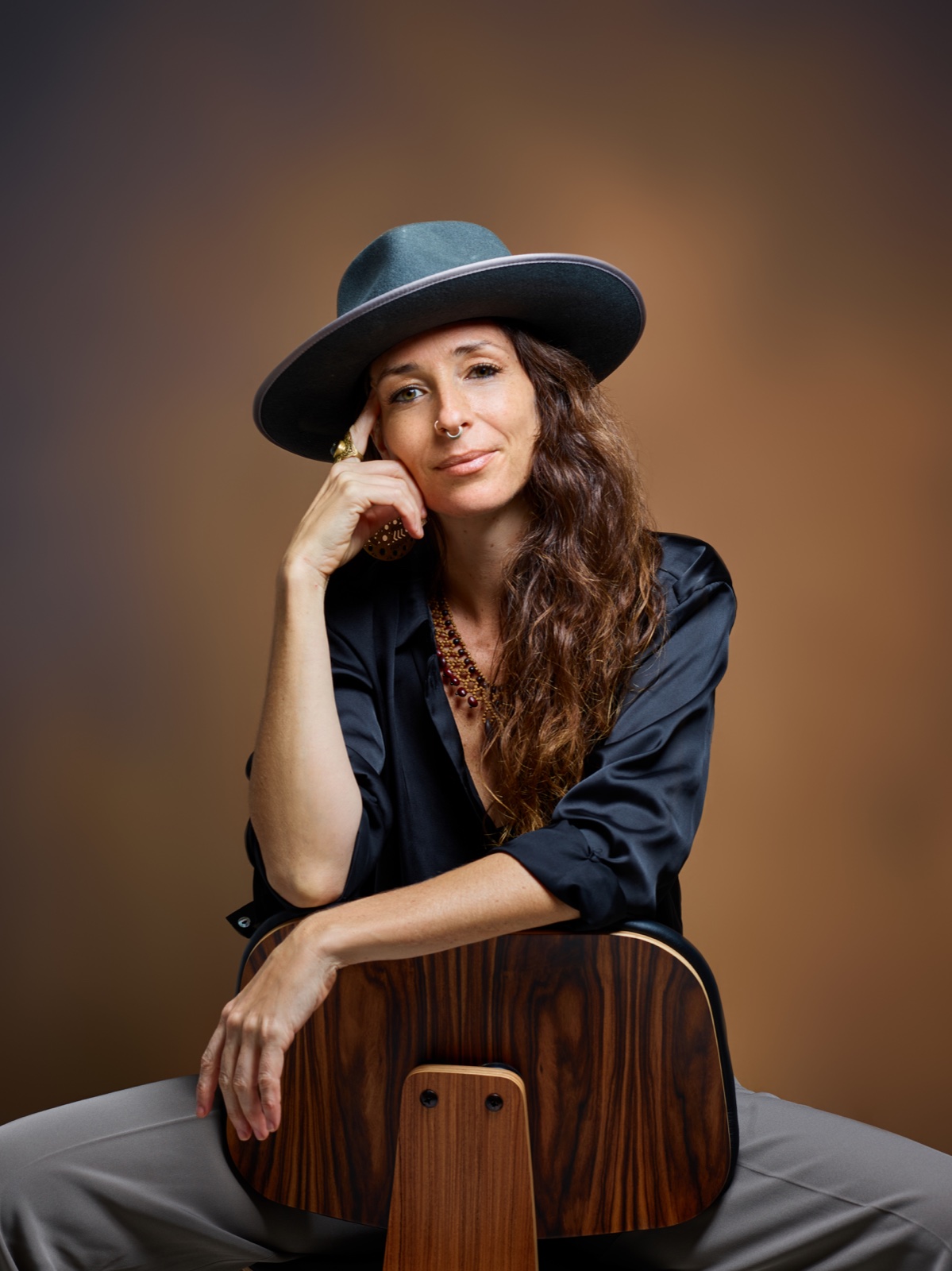
About Laura Dawn
Laura Dawn, M.Sc.
Laura Dawn is a teacher, speaker and facilitator whose work explores creativity, change leadership, expanded states of consciousness, human flourishing and ecological stewardship.
She holds a Master of Science in Creativity and Change Leadership and has spent more than two decades supporting leaders, entrepreneurs and changemakers through periods of personal and collective transformation.